Why Nighttime Breathing Trouble Often Starts With Your Bedroom Air
Sleep problems tied to asthma often trace back to the air circulating through a bedroom overnight rather than anything happening during the day. Dust mites, pet dander, and pollen settle into bedding and carpet fibers, then get stirred back into the air every time a sleeper shifts position. Because airways tend to be more reactive during sleep, even a modest rise in irritant particles can trigger coughing, wheezing, or chest tightness strong enough to pull someone out of deep rest. For people managing asthma, this pattern can repeat night after night, turning hours meant for recovery into a cycle of interruptions.
Many households underestimate how much indoor air quality declines overnight, since windows usually stay shut and the same air recirculates in one room for eight hours or more. Heating and cooling systems help spread allergens throughout a home rather than removing them, which compounds the issue in enclosed bedrooms. This nightly buildup explains why asthma symptoms sometimes worsen well after midnight instead of during peak daytime pollen hours. Parents of children with asthma frequently describe the worst coughing episodes happening between two and four in the morning, long after any obvious daytime trigger has passed.
Filtering the Air Before It Reaches the Lungs
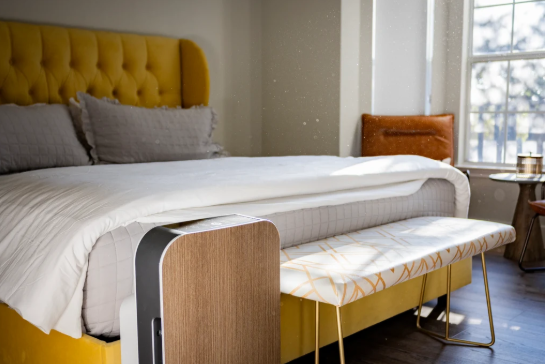
One practical response is treating the bedroom as its own controlled environment, using dedicated filtration instead of relying solely on a whole-house HVAC system. HEPA-grade purifiers pull air through dense mesh filters capable of capturing particles as small as pollen fragments and mite debris before they resettle onto bedding. This is where a unit marketed among best asthma air purifiers becomes genuinely relevant, since these machines are built to run quietly through an entire night without introducing noise that disrupts sleep on its own. Placing the purifier near the bed rather than across the room noticeably increases how much filtered air actually reaches a sleeping person.
Running a purifier doesn’t replace medical treatment, but it addresses the environmental side of asthma management that inhalers and medication alone can’t resolve. Pairing regular filter changes with basic housekeeping, such as washing bedding weekly and vacuuming with a sealed-filter machine, reduces the raw material a purifier has to work through in the first place. Over weeks and months, this combination lowers the baseline irritant load in a room, which carries more weight for someone with reactive airways than it would for a person without respiratory sensitivities. The goal isn’t a spotless room; it’s a steadier, less irritating one overnight.
See also: When to Increase Tirzepatide: The Four-Week Minimum and Tolerability Decision
Matching Filter Specs to Actual Bedroom Conditions
Choosing a purifier for asthma management means looking past marketing claims and checking a handful of concrete specifications. The clean air delivery rate, particularly the smoke rating, correlates closely with how well a unit removes the fine particles most relevant to asthma triggers. True HEPA filtration differs meaningfully from filters labeled ‘HEPA-type,’ and the distinction shows up in how much pollen and dander actually gets trapped rather than recirculated. Room size matters too, since an undersized unit forced to run at maximum speed all night ends up noisy without delivering the coverage a larger room actually needs.
Noise output at the lowest fan setting deserves particular attention, since that’s the speed most people run overnight and it directly affects whether the device gets left on at all. For households unsure whether outdoor conditions are contributing to what’s happening indoors, CDC air quality and health resources offer a way to track local particulate levels and identify stretches when outdoor air quality is poor enough to justify keeping windows shut. Pairing that outdoor awareness with a consistent indoor filtration routine gives a fuller picture of what’s actually driving nighttime symptoms. Small adjustments made with real data tend to hold up better over time than guesswork based on how a room simply looks or smells.
